The state is in the midst of another attempt to control the population of invasive New Zealand mud snails in Capitol Lake.
But, lowering the lake to try to freeze out the snails likely isn’t going to do the trick. Doug Myers, Director of Science for People For Puget Sound, explains why:
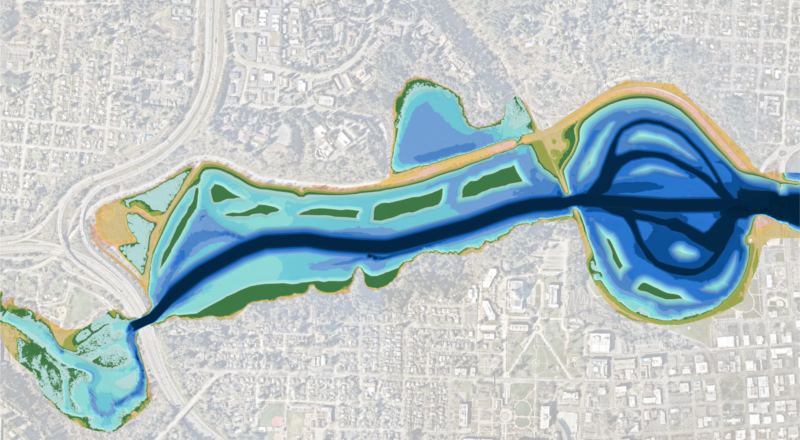
The very nature of Olympia, one of the springs capitals of the world, prevents lake drawdowns from being a very effective treatment for New Zealand Mud Snails. During the last freeze attempt, I walked around the lake. It was very cold, there was snow on the ground and parts of the exposed mudflats had a crust of ice on them. However, the thousands of tiny springs and seeps that continue to flow into the lake, even during drawdown provide a thermal refuge for the snails. In the end, this once a year shock may reduce the snails populations a little, but will not eliminate them or maintain them at low population levels. Daily inundation with saltwater would be a much more effective treatment, at least for the central and north basins greatly reducing the distribution of the snails to the freshest south basin. Reducing the aerial extent of the infestation would also greatly reduce the likelihood of birds spreading the snails to adjacent freshwater systems like Black Lake.
Several members of the Deschutes Estuary Restoration Team attended the Olympia City Council meeting last night and spoke about how estuary restoration would help address the infestation of mud snails in the lake.
The cities of Olympia, Lacey and Yelm and the Squaxin Island Tribe will likely soon sign an agreement to finally get some work done in restoring freshwater habitat throughout the Deschutes River watershed. Of course, we at DERT are specifically interested in restoring the Deschutes River estuary, but we are incredibly excited about the formation of this new group.
Here is the city of Olympia’s staff report on the new organization.
The most encouraging thing is that this group will not be focused on planning, but executing on the ground habitat projects. There have been many planning efforts on what is wrong with the Deschutes River watershed, so its great that the cities and the tribe are working to put those plans into action.
In terms of the mouth of the river as it reaches Budd Inlet, there is a lot of work left to do. And, even if every inch of the upper Deschutes is restored, the problems associated with the damning of the estuary would still exist.
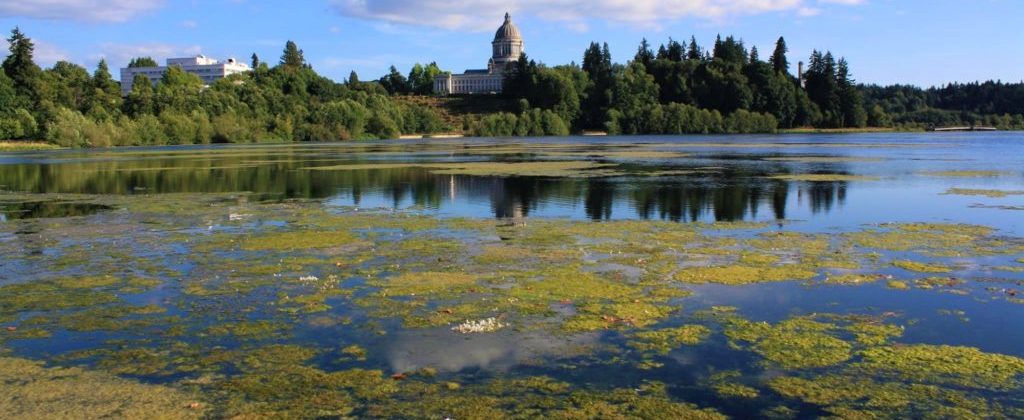
Capitol Lake itself is too shallow and stagnant to control temperature. Even with an agressive sediment control program in the upper watershed, 75 percent of the fine sediment coming down to the lake is natural, so the lake would continue to fill. And, according to the Department of Ecology, the lake would need to be 300 feet deep to control algae blooms.
These are all issues connected to the nature of the lake itself as a dammed estuary, and not with the condition of the upper watershed.
Here’s a video explaining how improvements in the upper watershed don’t address the estuary v. lake debate.